.png)
IP Strategy for Product Managers | Session Recap | Myriam Davidson

Updated: Mar 20
Event Review by Andrew Faulkner
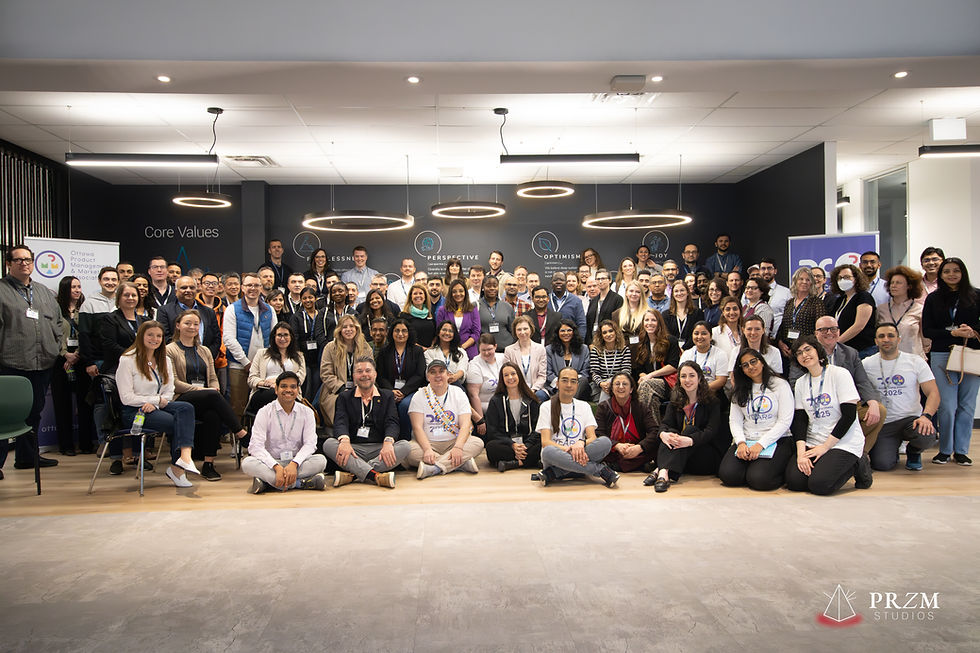
Our February event featured Myriam Davidson from Stratford Intellectual Property for a very practical conversation about IP strategy for product managers.
The discussion stayed firmly grounded in business reality. This was not about legal theory. It was about how IP supports product and company strategy when it is handled deliberately and early.

One of the clearest messages from the evening was timing. IP works best when you engage while ideas are moving into R&D and something genuinely novel is beginning to emerge. Waiting until launch is usually too late. Product managers do not need to become patent agents, but they do need to understand how to manage the process and when to involve the right expertise.
reinforced a simple but often forgotten point: business strategy comes first. IP is not a separate legal track running beside the organization. It should align with product direction, R&D priorities, marketing plans, finance decisions, IT practices and people policies. If those functions are not aligned, IP ends up in a silo and loses impact.
Myriam encouraged us to be intentional, proactive and pragmatic. A perfect IP plan that cannot be implemented inside your organization is simply expensive theatre. The objective is not perfection. The objective is alignment with real product and business outcomes.
We also discussed that patents are only one tool. Strong protection often layers patents with trade secrets, copyright, industrial design and trademarks. The right mix depends on what you are trying to achieve. Not everything should be patented. In some cases, what you choose not to disclose is as important as what you file.
Another important insight was drafting for the future. Products evolve. Competitors design around you. Technology shifts. If you only protect today’s version of your product, you risk watching your IP drift away from your roadmap. Early brainstorming and thoughtful drafting provide flexibility later.
Risk management through the lifecycle was another theme. Sensible search and review habits are better than ignoring the topic entirely. You will never eliminate uncertainty, but you can make informed decisions. Public disclosure also matters. Conferences, demos, customer pilots and public AI tools can unintentionally disclose value if not handled carefully.
We also touched on funding. There are Canadian programs that can help support IP development, but the terms matter. Ownership, reporting and diligence implications are not minor details. They are strategic considerations.
Finally, we had an honest discussion about enforcement. Patents can be powerful, but enforcing them requires time, money and leadership focus. File with a clear business reason that matches your appetite and capacity to act. Accumulating filings without intent rarely creates value.
If I had to summarize the evening in one sentence, it would be this: build the moat on purpose. Engage early, layer protection thoughtfully and keep IP decisions tied to product strategy and business reality.
Thank you to everyone who attended and contributed thoughtful questions and thank you to Myriam for an energetic and refreshingly plain-language session on a topic that is usually anything but plain.
See you all at our next event.